


40 Aussie Inventions You Didn’t Know!
Australia is home to unique flora, fauna, and landscape. Australians themselves are known for their laid-back attitudes, friendly personas, and mateship. But did you know about the great life-changing Aussie inventions that have shook the world?
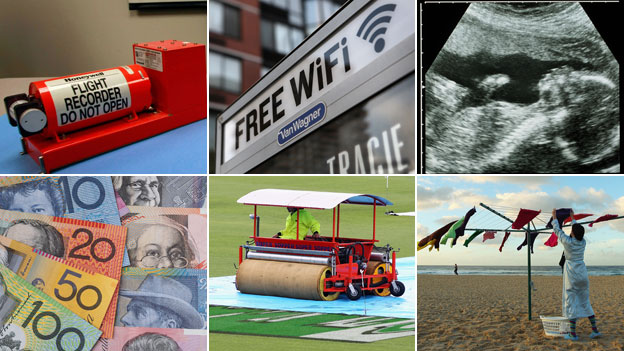
Let see how many you know:
1. Google Maps
Danish brothers Lars and Jens Rasmussen developed the platform for Google Maps in Sydney in the early 2000s. Along with Australians Neil Gordon and Stephen Ma, they founded a small start-up company called Where 2 Technologies in 2003. The following year it was bought by internet giant Google, which also hired the four men, and the technology was turned into what we now know as Google Maps.
2. WiFi Technology
In 1992 John O’ Sullivan and the CSIRO developed Wi-Fi technology, used by more than a billion people around the world today. The core parts of the technology came out of research in the mid-1970s in the field of radio astronomy, when John and his colleagues at the CSIRO were originally looking for the faint echoes of black holes.
As a result of this work, the CSIRO has held key patents for Wi-Fi technology since the mid-1990s, bringing the organisation millions of dollars in royalties every year.
3. Cervical Cancer Vaccines
In 2006, Brisbane-based medical researchers Professor Ian Frazer and Dr Jian Zhou developed the world’s first anti-cancer vaccine. Known by the commercial name, Gardasil, the vaccine protects women against four strains of a virus called human papillomavirus (HPV), known to cause three-quarters of all cervical cancers. As cervical cancer is the second-leading cause of cancer death in women, the vaccination has huge implications for the prevention of cancer. Since 2008, the vaccine has been approved for use in more than 120 countries.
4. Inflatable Escape Slide and Raft
In 1965 Jack Grant, an employee of Qantas, invented the inflatable aircraft escape slide, which is now mandatory safety equipment on all major airlines. The slides can also be used as a flotation device if the aircraft lands on water.
5. Ultrasound Scanner
In 1976 Ausonics commercialised the ultrasound scanner. Studying ultrasound from 1959 onwards, the Ultrasonics Research Section of the Commonwealth Acoustrics Laboratories Branch (later to become the Ultrasonic Institute) discovered a way to differentiate ultrasound echoes bouncing off soft tissue in the body and converting them to TV images. This discovery forever changed pre-natal care as it gave expecting parents a window to the foetus without x-ray exposure. Ultrasound technology is also used in the diagnoses of medical problems of the breast, abdomen, and reproductive organs.
6. Electric Drill
DIY-enthusiasts can thank an Aussie for this indispensible piece of equipment. In 1889, Australian electrical engineer Arthur James Arnot patented the world’s first electric drill with his colleague William Brain. The invention was originally designed to drill rock and dig coal, and although it was a long way from the portable hand-drills used today throughout the world, the underlyng technology was the same.
7. Bionic Ear (Cochlear Implant)
Professor Graeme Clark invented the first bionic ear Melbourne University in the 1970s – the first prototype was implanted in a person in 1978. Cochlear implants are devices that are implanted into the head to electronically stimulate the auditory nerve. Graeme’s motivation to advance hearing loss technology was spawned from his own father’s inadequate hearing. So far, the Cochlear implant has brought hearing to more than 180,000 deaf and partially deaf people worldwide.
8. Polymer Bank Notes
Plastic bank notes were developed in a combined effort by the Reserve Bank of Australia and CSIRO in the 1980s. The first plastic bank note to be put into circulation was the $10 note, released in 1988 to celebrate the bicentenary. In 1996, we became the first country to have a complete set of plastic currency.
Traditionally, bank notes are made from paper, cloth fibres or a combination of both. Our bank notes are made from a special polymer which, along with a series of in-built security devices, makes them almost impossible to counterfeit. They also last about 10 times longer than traditional bank notes.
9. Medical Application of Penicillan
In 1939, Australian scientist Howard Florey purified penicillin from a special strain of mould. The team demonstrated penicillin’s ability to fight bacterial infection in mice and, later, humans. The antibiotic was mass produced and used to aid victims of World War II. Penicillin has been used around the world saving many lives through the combating of infection by common bacteria. Today, it is still widely used in combating infections, but its efficacy is at risk from the growing resistance to the antibiotic.
10. Electronic Pacemaker
Australian doctor Mark Lidwill and physicist Edgar Booth developed the first artificial pacemaker in the 1920s. Now, more than three million people worldwide rely on pacemakers to keep their hearts beating properly.
Artificial pacemakers send small electric charges into the heart to help it maintain a regular beat. Since the late 1960s, these have been implanted inside the body; the first of these was developed in Sydney by Lidwell and Booth. Lidwill used the invention in 1928 to revive a stillborn baby – small pulses of electicity were sent through a needle directly into the child’s heart. After 10 minutes, the equipment was switched off, the heart continued to beat and the infant made a full recovery.
11. Spray-On Skin
In 1999, Perth-based plastic surgeon Professor Fiona Wood patented her spray-on skin technique. The innovation involves taking a small patch of the victim’s healthy skin and using it to grow new skin cells in a laboratory. The new skin cells are then sprayed on the victim’s damaged skin. This process significantly reduces recovery time and scarring. Fiona and her spray-on skin technique played a key role in treating burns victims from the 2002 Bali bombings. Fiona and her team are credited with saving the lives of 28 people.
12. Black Box Flight Recorder
The black box flight recorder has helped make commercial air travel the world’s safest form of travel. It was invented by Australian scientist Dr David Warren, who lost his own father to an aircraft tragedy in 1934 when the Miss Hobart crashed into the Bass Strait.
This remarkable device is virtually indestructible and records the final moments of a crashed plane’s last flight. While it is a box, it’s not black – it’s bright orange colour is called ‘international orange’, making it easier to find in crash-site rubble.
David Warren first had the black box idea in the 1950s when he was part of a Melbourne research team exploring why the commercial jet aircraft known as the Comet had suffered a series of deadly crashes. He thought it would help investigators fix what was wrong if they had a recording of the last conversations between crew and other sounds inside the plane before it crashed.
A black box is now installed on every commercial plane around the world, but it was in Australia that they were first made compulsary for all commercial flights.
13. Full-Length Feature Film
The Story of the Kelly Gang, which ran for just over an hour screened at the Athenaeum Hall in 1906 was the world’s first feature length film.
14. Wine Casks
The wine cask was invented in 1965 by Thomas Angrove. Described in the patent application as ‘improved container and pack’ for liquids, the 1 gallon polyethelene bladder in a corrugated cardboard box did not have the tap we enjoy today but was cut open and resealed with a peg.
15. Surf Ski
When he was only a 15 year old lad in 1912, inspired by porpoises, Harry McLaren designed the surf ski to ride the waves at Pelican Island near the mouth of the Hastings River.
16. Zinc Cream
Before the suntan lotions we know today there was Zinc Cream, a thick white cream made from zinc oxide that folks, especially cricketers smeared across their noses. The cream was developed in 1940 by the Faulding Pharmaceutical Company in Australia.
17. The “Ute”
The ubiquitous ute was designed in 1934 by Lewis Bandt at Ford in Geelong, the ideal vehicle for the farmer or tradesman.
18. The Refridgerator
In 1855, James Harrison, founder of the Geelong Advertiser newspaper (1840), was granted a patent for an ether vapour-compression refrigeration system. James won a medal in 1873 for proving he could keep meat frozen and edible for months.
19. The Hills Hoist Clothesline
Motor mechanic, Lance Hill, invented the Hills Hoist in 1945 is South Australia. The now iconic rotary clothes line is listed as a National Treasure by the National Library of Australia and featured in the closing ceremony of the Sydney Olympic Games in 2000.
20. Staysharp Knife
Wiltshire Cutlery in Melbourne, in response to an American survey showing 80% of people did not know how to sharpen a knife, set their engineer Dennis Jackson to work and the self-sharpening Staysharp Knife was designed and test marketed in Perth in 1969.
21. Power Board
The power board was invented in 1972 by Kambrook. Despite its success it was a sad story for Kambrook who neglected to patent their invention, potentially missing out on millions of dollars in royalties.
22. Dual Flush Toilet
What would a dinky di Aussie article be without the mention of a dunny? The water saving dual flush toilet was invented by Caroma in 1981.
23. Victa Lawn Mower
How happy must the Aussie bloke have been when he could retire his push mower to the back of the shed and stroll around his lawns behind the roar of a Victa Lawn Mower. Invented by Mervyn Victor Richardson in 1952, more than 8 million Victa mowers have been sold around the world by 2011.
24. Solar Hot Water
Solar power is a hot topic these days so you may be surprised to learn it was in 1953 that Roger Morse working with the CSIRO invented a solar hot water system that was 20% more efficient than those currently in use.
25. Notebook (the Paper Pad not the Computer)
In 1902 J.A. Bircall, a Launceston stationer invented the humble cardboard backed, top glued notepad. Birchalls, recognised as Australia’s oldest bookshop, having opened for business in November of 1844 still exists today.
26. Mechanical Shearing Clippers
In a time when up to 50,000 sheep might be sheared on one station many a shearer must have sighed in relief in 1877 when Frederick Wolseley invented mechanical shearing clippers.
27. Polilight Forensic Torch
The Polilight is a forensic tool invented by Ron Warrender and Milutin Stoilovic at the Australian National University in 1989. It shows fingerprints up against a background.
28. Tank (War Vehicle not the Water Container)
The tank was invented in 1912 by Australian engineer Lance de Mole and although it received little interest on first submissions but was put into use during the First World War.
29. Blast Glass
Blast Glass is the superman of bullet proof glass. Invented by Peter Stephinson in 2003, the glass, built to withstand an explosion was successfully tested in Woomera against a 5 tonne bomb.
30. Jindalee Radar System
SIRO scientists developed the Jindalee Radar System in 1995 to detect stealth aircraft through monitoring sea and air movements
31. Stainless Steel Braces
Percy Raymond Begg of Adelaide collaborated with metallurgist Arthur Wilcock to develop a gentler, stainless steel system in 1956 involving gradual adjustments rather than earlier brute force methods used to straighten teeth.
32. Frozen Embryo Baby
The world’s first frozen embryo baby was born in Melbourne on 28 March 1984
33. Underwater PC Laptop
The world’s first underwater computer with a five-button hand-held keypad was developed by Bruce Macdonald at the Australian Institute of Marine Science.
34. Blood Test to Prevent Stillbirth
In 2013, a Melbourne medical research institution, Mercy Health, identified a method of analysing RNA fragments in a mother’s blood that indicates oxygen and nutrient deprivation in the foetus.
35. Winged Keel
Ben Lexcen, an Australian yachtsman and marine architect, invented the winged keel – a nearly horizontal foil, or wing, at the base of a sailing boat keel. They are typically found on high-performance sail boats. The winged keel made its debut in 1983 in America’s Cup on Australia II.
36. RaceCam
In 1979, Channel 7 introduced live television broadcasting from racing cars, allowing viewers to watch the race from the driver’s perspective. Today the Racecam has been adapted to fit other sporting events such as snow skiing, basketball and cricket.
37. Plastic Spectacle Lenses
In 1960 Sola Optical released the first scratch-resistant plastic lens for glasses. The technology was further developed to create the first plastic bifocal, trifocal, and progressive-focus lenses. Plastic lenses are used throughout the world due to their many benefits including safety, their light weight, and durability.
38. Frazier Lens
In 1993, Australian inventor Jim Frazier’s deep-focus lens was patented in the United States. His innovative lens allowed for both the subject and background to be in focus at the same time. It also has the ability to rotate without the movement of the camera. The lens is now commonly used in movies and film throughout the world. Jim won an Academy Award in 1998 for his contribution
39. Tank-Bred Tuna System
In 2008, German-born but South Australian-based Hagen Stehr may have saved the southern blue fin tuna from extinction. The clean-seas system fools the tuna in a tank into thinking they are swimming out of the Australian Bight and into their breeding grounds.
And of course,
40. Vegemite
This iconic thick, black Australian food spread made from leftover brewers’ yeast extract with various vegetable and spice additives. It was developed by Cyril Percy Callister in Melbourne, Victoria in 1922.
Vegemite is an excellent source of B vitamins. In fact, one teaspoon provides half an adult’s daily requirements for folate and thiamine. The spread is low in energy, with one teaspoon providing less than 50 kilojoules and containing 1.5 grams of protein, no fat and no added sugar.
